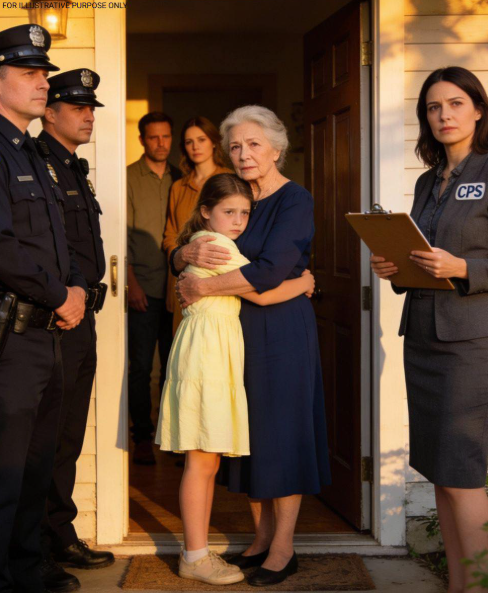
Something about Lily’s clenched hands made my chest feel tight. This didn’t look like attention-seeking. It looked like fear.
I stepped back, but I kept watching her. She didn’t move toward the pool. She stayed where she was, quiet and separate from the rest of the day.
A little later, I went inside to use the bathroom. The house was silent. When I turned around, Lily was standing in the doorway.
Her face was pale. Her eyes were filled with tears.
“Grandma,” she whispered. “Can I stay with you for a little while?”
I knelt down and hugged her gently. She held onto me as if she had been holding something heavy inside all day.
“What’s wrong, honey?” I asked softly.
She hesitated, then whispered, “I don’t like it when Mom and Dad get angry. They say I’m bad when I don’t listen.”
My heart ached. I brushed her cheek. “You’re not bad. You know that, right?”
She shook her head. “They say I need to learn. And if I talk, I get in trouble.”
I understood then that this wasn’t something I could ignore—or handle alone.
“You did the right thing by telling me,” I said quietly. “I’m here to keep you safe.”
I guided her to the guest room and closed the door. Then I took out my phone and made a call—not in panic, but with care. I asked for help. I explained that my granddaughter was afraid and needed protection.
When I returned, Lily was sitting on the bed, swinging her legs nervously.
“Am I in trouble?” she asked.
See more on the next page
Advertisement
