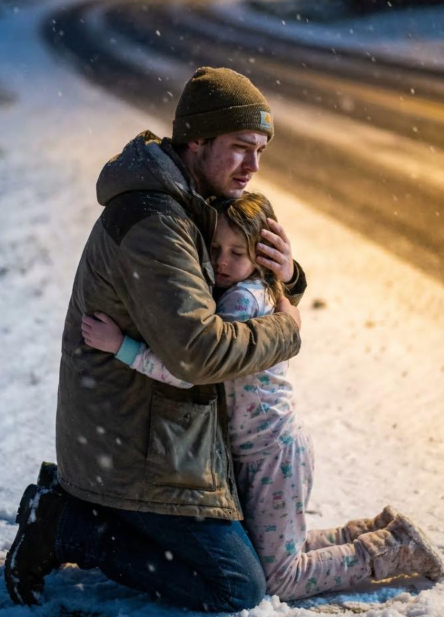
She was afraid of storms and laughed too hard at old cartoons.
She trusted people who smiled at her.
That trust nearly killed her.
The court process took months—but it wasn’t complicated.
Evidence doesn’t care about wealth.
Bruises don’t fade because someone writes large checks.
Children don’t lie the way adults hope they will.
They were charged.
Then convicted.
No donations saved them.
No speeches softened the facts.
No lawyers with perfect hair changed the outcome.
Prison doesn’t care who you were at galas.
Mia came home with me.
The first months were the hardest.
She woke screaming some nights.
Flinched when doors closed too loudly.
Asked permission to eat. To sit. To speak.
So I taught her something else.
That homes don’t lock children out.
That families don’t plan funerals for the living.
That love doesn’t require signatures.
A year later, on Christmas night, snow fell softly.
Not violently.
Not cruelly.
Mia sat on the couch in warm pajamas, wrapped in a blanket, holding a mug of hot chocolate with both hands. Her laughter filled the room—loud, unrestrained, alive.
She looked at me and asked, very carefully:
“They can’t hurt me anymore… right?”
“No,” I said. “They can’t.”
And for the first time since that night on the road, I knew it was true.
See more on the next page
Advertisement
